


SPINEAST · SCOLIOSIS CARE
What is Scoliosis?
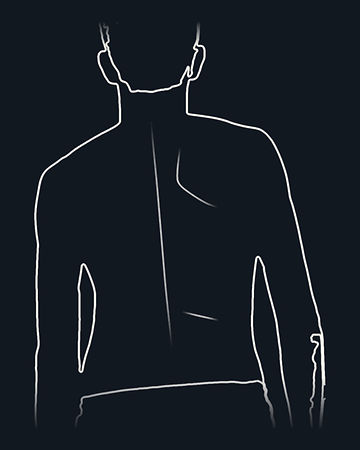
Scoliosis is an abnormal sideways curvature of the spine of more than 10 degrees, measured as the Cobb angle on an X‑ray.

Causes
Some cases of scoliosis are congenital—that is, an abnormal curvature in the spine that forms during spinal development and is present from birth.
Other cases may be the result of neuromuscular diseases such as cerebral palsy or muscular dystrophy.
The most common type of scoliosis, idiopathic scoliosis, has no known cause. Therefore, early diagnosis and intervention are crucial to successful treatment.

Symptoms
The most common symptoms of scoliosis include shoulder or hip alignment inequality, a significant curvature of the spine when bending forward, and asymmetry in the waistline.
In some cases, scoliosis can cause back pain, but in mild cases, many individuals may not experience any noticeable symptoms.

Diagnosis
Early diagnosis is crucial for effective treatment. If you suspect scoliosis or notice the symptoms, you should definitely be evaluated by a specialist.
The diagnostic process usually includes a physical exam, medical history review, and, if necessary, imaging tests such as X‑rays to clearly measure the curvature of the spine.
TREATMENT OPTIONS
Treatment Methods
Scoliosis treatment is determined by the degree of curvature in the spine, the rate of progression, and the person's age.
Mild cases usually only require regular follow-up, but in cases where the curvature is more pronounced or continues to progress, active intervention may be necessary. Common treatment options include:
MILD CURVES
Observation
In mild cases of scoliosis, follow-up is done at regular intervals to ensure that the curvature is not progressing.


MODERATE CURVES · GROWING PATIENTS
Bracing: Patient‑Specific 3D‑Printed Brace
By using a specially designed brace, the progression of the curvature of the spine during the growth process is stopped or minimized.
At SPINEAST, every brace is patient‑specific and 3D‑printed. We start from a 3D scan of the torso together with the patient's X‑rays, and design the brace digitally so that corrective pressure is applied exactly where the curve needs it, while leaving room where the body needs space to move and breathe. Production with 3D printing reproduces the design precisely, and the brace can be updated as the patient grows.
Because it is printed rather than hand‑moulded, a 3D‑printed brace can be thinner and lighter than a conventional brace, with a ventilated pattern that lets the skin breathe. This matters, because a brace only works when it is worn: bracing is most effective during growth, and a lighter, more comfortable brace makes the recommended daily wearing time easier to reach. Your doctor sets the wearing schedule and monitors the curve at regular check‑ups.

SUPPORTIVE CARE
Physical Therapy
Special exercises and therapy methods are applied to correct posture, increase muscle strength and improve flexibility.

ADVANCED CURVES
Surgery
The surgical methods preferred in advanced scoliosis cases aim to correct the curvature of the spine and stabilize the spine with the help of special implants.